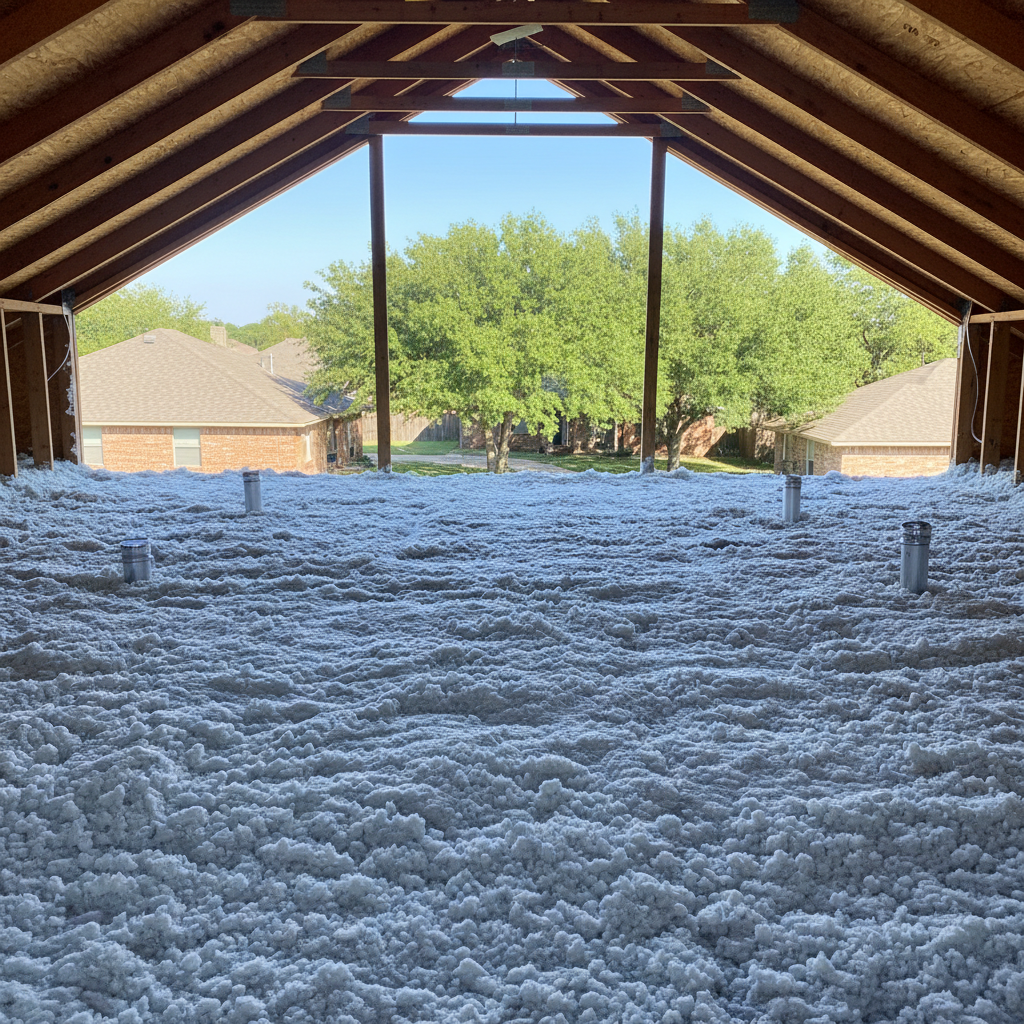
Climbing up into your attic during a scorching July afternoon in Forney, Texas can feel like stepping into an oven. That brutal heat puts massive strain on your home, and your Blown-In Insulation is the primary shield fighting back. Guardian Insulation Solutions talks to homeowners all the time who think Blown-In Insulation is a set-it-and-forget-it feature. Unfortunately, that is not how it works in Kaufman County, where shifting soils, high humidity, and intense thermal cycles can mess with your attic's efficiency.
What Regular Maintenance Looks Like
Homeowners do not need to crawl around their attic every weekend, but a twice-a-year checkup will save you a lot of trouble with your Blown-In Insulation. Spring and fall are the ideal times to poke your head up there with a flashlight and a tape measure. You want to check the overall depth of your cellulose or fiberglass loose-fill. Over time, Blown-In Insulation can settle, especially if it gets exposed to moisture leaks from roof flashing during heavy spring storms.
Check that your soffit vents are not blocked. It is easy for loose-fill Blown-In Insulation to drift into the eaves and choke off the airflow your roof deck desperately needs. If your attic cannot breathe, trapped heat builds up, and your cooling bills skyrocket. Keep an eye out for any disturbing signs of unwanted critters too. Field mice and squirrels love tunneling through fluffy Blown-In Insulation to build nests when the weather turns.
Warning Signs Your Insulation Needs Help
Your utility bill is usually the first whistle-blower. If your air conditioner is running constantly and your rooms still feel stuffy, heat is likely bleeding right through your ceiling. Another dead giveaway is uneven room temperatures or stubborn hot spots in bonus rooms and second floors.
Grab a flashlight and look closely at the material itself. If you spot dark, dirty stains on the fluffy surface of your Blown-In Insulation, air is leaking up through your ceiling drywall and filtering through the Blown-In Insulation, leaving dirt behind. Clumping, damp patches, or a musty smell mean you have a roof leak or condensation issue that needs attention before mold takes root.
How to Extend the Life of Your Insulation
Protecting your investment comes down to managing airflow and moisture. Make sure your bathroom exhaust fans vent all the way outside through the roof or soffit, rather than just dumping moist air straight into the open attic space. A single loose duct joint can saturate Blown-In Insulation in a matter of weeks.
Air sealing before adding any new material makes a big difference. Causing gaps around wire penetrations, plumbing stacks, and light fixtures to stay tightly sealed stops conditioned air from escaping into the attic. When you keep the envelope tight, your Blown-In Insulation stays dry, fluffy, and right where it belongs.
When to Call a Professional
Some maintenance tasks are easy DIY chores, but others require professional hands. If you discover widespread water damage, sagging drywall, or chewed-up Blown-In Insulation from pests, it is time to bring in backup. Contaminated or soaked Blown-In Insulation loses its thermal value completely and often needs a complete extraction.
Guardian Insulation Solutions has the heavy-duty vacuums and specialized equipment to safely suck out ruined material, sanitize the decking, and blow in a fresh, high-R-value layer of Blown-In Insulation. For homes and businesses in Forney, Guardian Insulation Solutions provides Blown-In Insulation services.