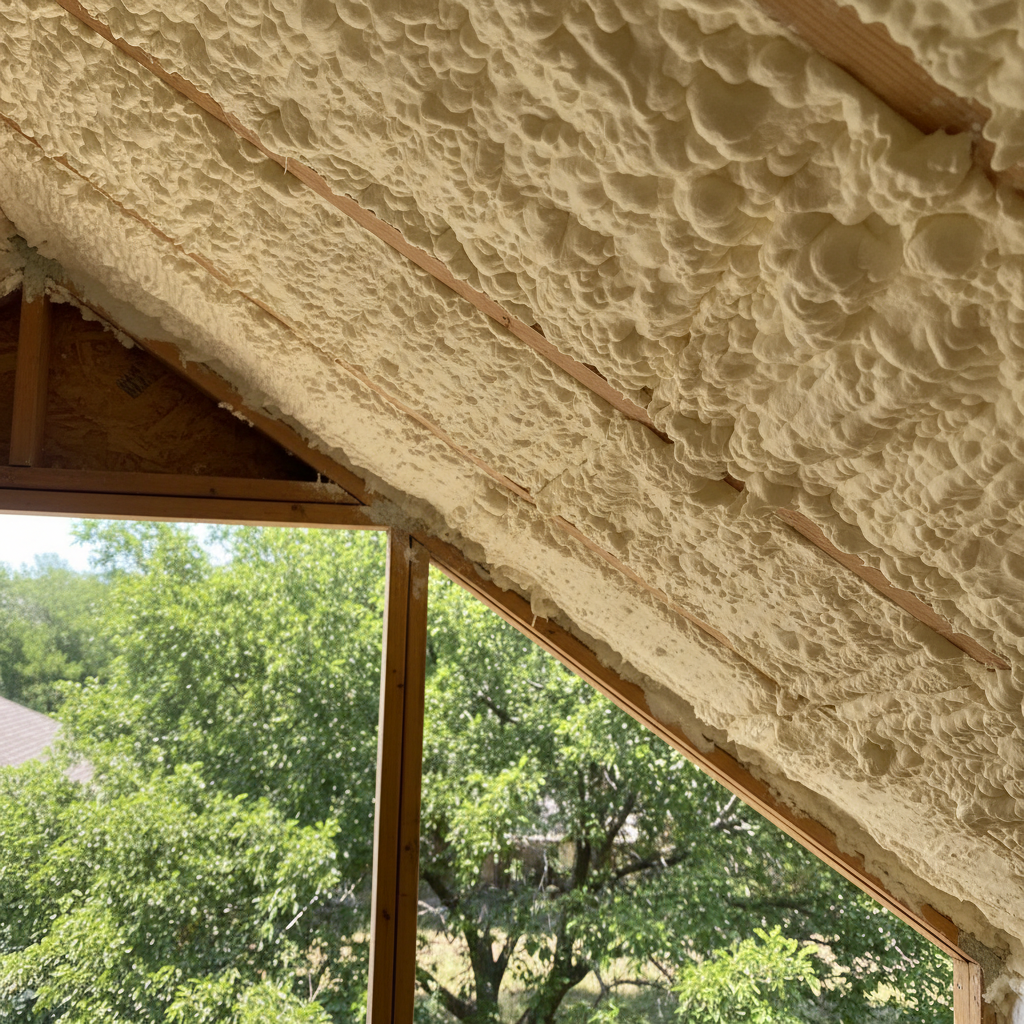
Alright, let's talk closed-cell spray foam. If you're a homeowner in Forney, you've probably heard the buzz about this stuff, right? It's not just another insulation choice; it's a real game-changer for energy efficiency and comfort, especially with our Texas summers and those occasional winter freezes.
What Even IS Closed-Cell Spray Foam?
So, what exactly are we dealing with here? Closed-cell spray foam is a type of polyurethane foam. When you spray it, it expands and then hardens into a rigid, dense material. The 'closed-cell' part means the tiny foam cells are packed super tight, sealed off from each other. This makes it incredibly resistant to air and moisture moving through it. Think of it like a solid, impenetrable barrier for your home. Unlike open-cell foam, which is softer and more sponge-like, closed-cell is tough. You can even walk on it in an attic without crushing it, though I wouldn't recommend making a habit of it.
Before You Even Think About Spraying
Before you jump into a closed-cell spray foam project, there are a few things you absolutely need to consider. First, understand that this isn't a cheap solution. It's an investment, and it really pays off in energy savings and comfort, but the upfront cost is higher than traditional insulation. You'll want to get a few quotes and make sure you're comparing apples to apples. Ask about R-value, warranty, and what prep work they include.
Next, think about what you're trying to achieve. Are you insulating a new build, an existing attic, a crawl space, or maybe a metal building? Closed-cell is fantastic for all of these, but the application process and necessary prep can vary quite a bit. For example, if you're insulating an existing attic, you'll need to make sure all old insulation is removed. This can be a messy job, and it's often best left to the pros, especially if there's any sign of mold or pests.
Another big one: ventilation. If you're sealing off your attic with spray foam, you're essentially bringing that space into your home's conditioned envelope. This means your attic ventilation strategy might need to change. Sometimes, you'll need to remove existing vents or ensure proper attic air sealing to prevent moisture issues. This isn't something you want to guess at; it needs to be done right.
During the Project: What to Expect
When it comes to the actual spraying, this is almost always a job for professionals. Seriously, don't try to DIY closed-cell spray foam unless you're a trained and certified applicator. Here's why:
- Equipment: It requires specialized, expensive equipment that heats and mixes chemicals at high pressure. Not your average caulk gun, believe me.
- Safety: The chemicals involved are no joke. Proper personal protective equipment (PPE) is essential, including respirators, full-body suits, and eye protection. You definitely don't want to be breathing that stuff in.
- Application Technique: Getting an even, consistent layer that achieves the proper R-value and seals correctly takes skill. If it's applied too thick, too thin, or at the wrong temperature, you won't get the performance you paid for. You can end up with voids, or worse, off-ratio foam that doesn't cure right and can cause odors or other problems down the line.
- Forney's Climate: Our humidity levels here in Forney can really impact how the foam cures. A professional knows how to adjust for ambient conditions to ensure a perfect application every time.
When we're on a job, say in a new home build out in the Travis Ranch area, we'll make sure the area is prepped, protected, and well-ventilated during the application. Homeowners and pets should plan to be out of the house for at least 24 hours after application to allow for proper curing and off-gassing.
After the Spray Foam is Applied
Once the foam is in, you'll notice a difference pretty quickly. Your home will feel more comfortable, and your HVAC system won't have to work as hard. But there are still a few things to keep in mind.
- Inspection: Do a visual inspection. The foam should look consistent, without large gaps or areas where it's obviously too thin. It should be rigid and hard to the touch.
- HVAC Adjustments: Because your home is now much tighter, your HVAC system might be oversized. You might even need to consider a smaller unit or have your existing system re-balanced. This is a good problem to have, as it means less energy use.
- Penetrations: If you ever need to run new wiring or plumbing through the foam, it's doable but requires some effort. You'll need to cut through the foam, run your lines, and then seal the penetration back up, often with more spray foam or a compatible sealant. Don't leave those holes open!
- Long-term Performance: Closed-cell spray foam is incredibly durable. It won't settle, sag, or degrade over time like some other insulation types. It also acts as a barrier against pests and can even add structural integrity to your walls or roof deck.
At Guardian Insulation Solutions, we stand by our work. If you're thinking about closed-cell spray foam for your Forney home, give us a call. We're happy to walk you through the process, answer your questions, and make sure you get the best solution for your needs. It's a big investment, and you want to make sure it's done right the first time.