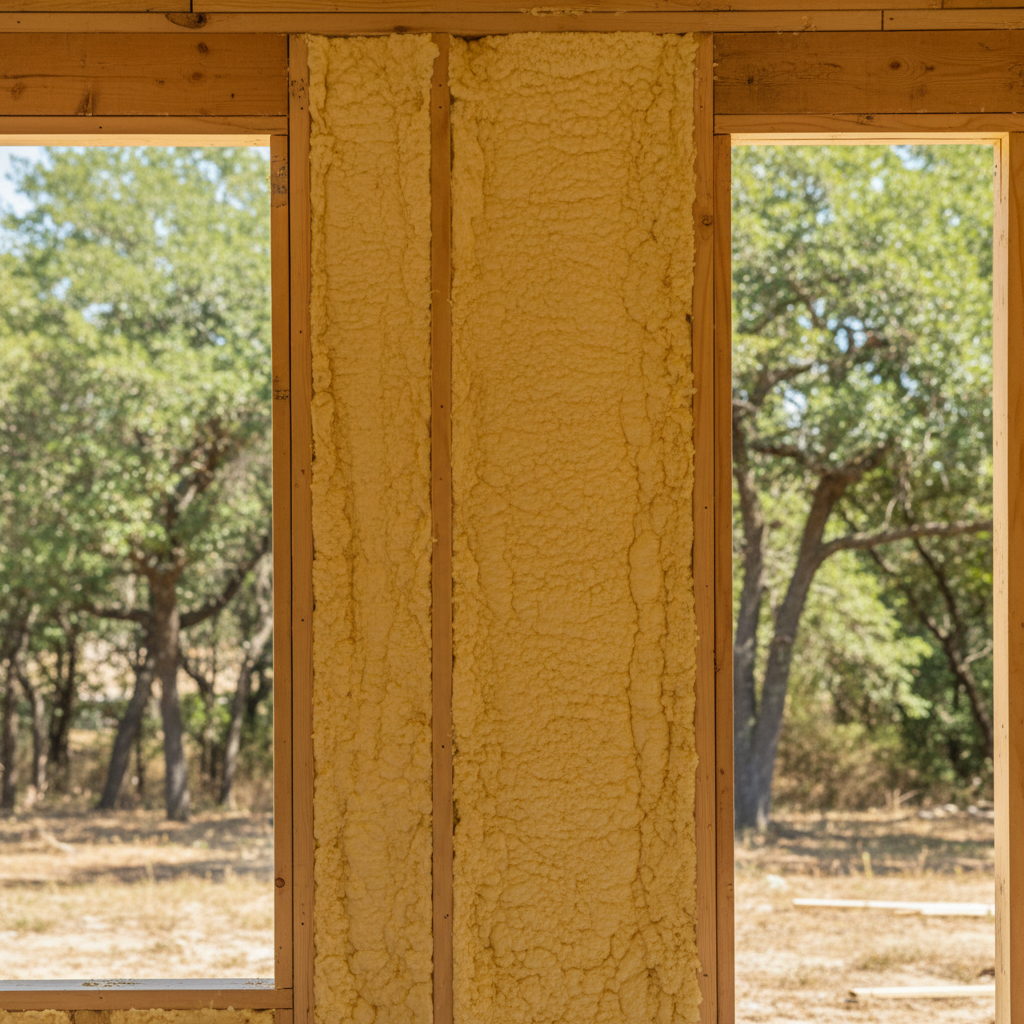
You're probably here because you've heard about closed-cell spray foam and you're wondering if it's really the right choice for your house. I get it. It's a big investment, and you want straight answers, not just some sales pitch. As a local guy who's been doing this for years, I've heard every question in the book. So, let's just dive into the most common ones I get from folks right here in Forney.
Is closed-cell spray foam really worth the higher cost compared to other insulation types?
This is probably the number one question I get, hands down. And it's a fair one, because yeah, closed-cell spray foam does cost more upfront than, say, fiberglass batts or even open-cell foam. But here's what I tell people: you're not just buying insulation; you're buying a complete air seal and a structural boost. Think about it. Closed-cell foam expands and hardens, creating an incredibly dense barrier that stops air leaks dead in their tracks. It's got a super high R-value per inch, which means you get more insulating power in a smaller space. That means your HVAC system isn't working nearly as hard, saving you money on your utility bills month after month, year after year. Over time, those savings often make up for the initial cost. Plus, it adds rigidity to your walls and roof deck, which is a nice bonus, especially with our Texas winds.
How long does closed-cell spray foam actually last? Will I ever need to replace it?
Good news here: closed-cell spray foam is designed to last the lifetime of your home. Once it's cured, it's a stable, inert material. It doesn't settle, sag, or degrade like some other insulation types can over decades. It's not a food source for pests, and it doesn't absorb water like a sponge, either. Unless it's physically damaged – say, if you're ripping out walls for a major renovation – you shouldn't ever need to replace it. It's a 'set it and forget it' kind of insulation. That's a huge relief for homeowners, knowing you won't have to deal with insulation issues again down the road.
What about off-gassing and indoor air quality? Is it safe for my family?
This is a really important concern, and it's one I take seriously. When closed-cell spray foam is installed correctly, by trained professionals like us at Guardian Insulation Solutions, it's completely safe. The key is the installation process itself. During application and for a short period afterward, there are fumes as the chemicals react and cure. That's why we always require homeowners and pets to leave the property for at least 24 hours, sometimes longer depending on ventilation and the specific product we use. Once it's fully cured, the foam is inert and doesn't off-gas harmful chemicals. It actually improves indoor air quality by sealing out allergens, dust, and pollutants from outside. We use products that meet strict industry standards for low VOCs (Volatile Organic Compounds), so you can breathe easy once it's set.
Can closed-cell spray foam be installed in existing walls or only during new construction?
It's definitely easier and more common to install closed-cell spray foam during new construction or during major renovations where the wall cavities are open. That's when you get that perfect, seamless application. However, it can be done in existing walls. It's a more involved process, though. We'd typically have to drill small holes in each stud bay, inject the foam, and then plug the holes. It's not as ideal as spraying into an open cavity because you can't always guarantee a completely uniform fill without seeing what's happening inside the wall. It's also messier and takes more time. For existing walls, sometimes dense-pack cellulose or even certain types of open-cell foam might be a better fit, depending on the specifics of your home and what you're trying to achieve. We'd definitely need to come out and take a look to give you the best advice.
Does closed-cell spray foam attract pests or mold?
Quite the opposite, actually! Closed-cell spray foam is an excellent deterrent for pests and mold. Because it creates such a tight air seal, it eliminates the tiny cracks and gaps that rodents, insects, and other critters use to get into your home. Unlike some other insulation materials, it's not a food source for them, and they can't tunnel through its dense structure. As for mold, mold needs moisture and a food source to grow. Closed-cell foam doesn't absorb water, and it's not organic, so it doesn't provide a food source. By preventing air and moisture infiltration, it significantly reduces the conditions necessary for mold growth. This is especially beneficial in our humid Forney summers, don't you think?
Will closed-cell spray foam make my home too tight? Do I need special ventilation?
Yes, closed-cell spray foam makes your home very tight – that's one of its biggest benefits! It's designed to stop air leakage, which is a major source of energy waste. Because it seals up all those natural drafts, your home will naturally have less air exchange with the outside. This means your indoor air quality can sometimes become an issue if you don't have proper mechanical ventilation. We often recommend considering an ERV (Energy Recovery Ventilator) or HRV (Heat Recovery Ventilator) system. These systems bring in fresh outdoor air while recovering energy from the outgoing stale air, so you maintain good air quality without losing your heating or cooling. It's a smart addition to a super-sealed home, ensuring you get all the benefits without any downsides.
Can closed-cell spray foam be used for soundproofing?
While closed-cell spray foam does offer some sound attenuation, it's not its primary strength or purpose. Its density helps block airborne sound to a degree, making your home quieter than if you had no insulation or just basic fiberglass. You'll definitely notice less outdoor noise, like traffic or barking dogs, getting into your living space. However, if your main goal is serious soundproofing – say, for a home theater or a quiet office – open-cell spray foam is actually more effective. Open-cell foam's softer, more porous structure is better at absorbing sound waves. Closed-cell foam is great for thermal performance and air sealing, but if sound is your absolute top priority, we might talk about open-cell or a combination of strategies.
Hopefully, that clears up some of your biggest questions. I always tell folks, don't just take my word for it. Do your research, ask around, and then give us a call. We're happy to come out to your place, take a look, and give you an honest assessment of what's best for your home, whether you're in a newer build out in Gateway or an older place closer to downtown.