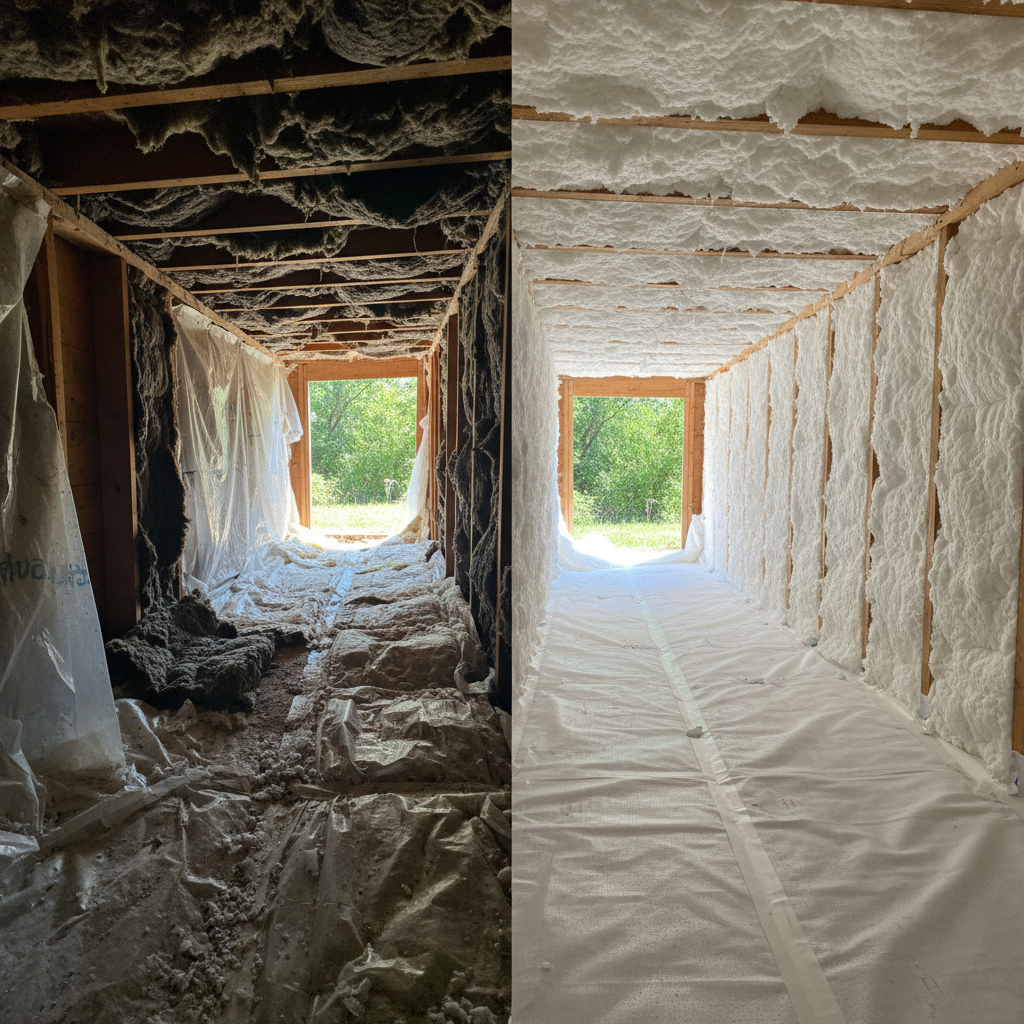
Got a crawl space under your house? Most homes around Forney do, actually, especially some of those older places in Clements Ranch or even newer builds trying to save a buck. And if you've got one, you've probably thought about how to keep it insulated. It's a big deal for your comfort and your energy bills, believe me.
When it comes to insulating a crawl space, folks usually go one of two ways: they stick fiberglass batts up between the floor joists, or they go all-in with what we call encapsulation. Both methods have their place, sure, but they're definitely not created equal, especially with our Texas weather.
Fiberglass Batts: The Old School Approach
Let's talk about fiberglass batts first. This is probably what most people picture when you say 'insulation.' It's those big rolls or pieces of fluffy pink or yellow stuff that get stapled up between the floor joists, right against the subfloor above. The idea is to stop heat from escaping through your floors in winter and keep the cool air in during summer.
Cost: Upfront, batts are usually cheaper to install. You're just paying for the material and the labor to cut and fit it. Pretty straightforward.
Durability & Maintenance: This is where batts start to fall short in a crawl space, especially around here. Our humidity in Forney is no joke. Fiberglass is like a sponge; it soaks up moisture. When it gets wet, it loses its R-value – that's its insulating power. It sags, falls down, and becomes a breeding ground for mold and mildew. I've seen countless crawl spaces where the batts are just lying on the ground, soaked and useless. Once they're down and wet, they're not doing you any good. Plus, they're a real pain to clean or put back up.
Appearance: Well, it's insulation. It's not really meant to be pretty. When it's new and installed correctly, it looks fine. But once it starts sagging or getting stained with moisture, it looks pretty rough.
My Take: For an attic, batts can be okay if installed right and kept dry. But for a crawl space, especially in a humid climate like ours? I'm not a big fan. They just don't hold up over time. You'll end up paying to replace them sooner than you think, and in the meantime, you're not getting the performance you paid for.
Crawl Space Encapsulation: The Modern Solution
Now, encapsulation is a whole different ballgame. This isn't just about insulating your floor; it's about treating your entire crawl space as part of your home's conditioned envelope. We seal off the crawl space from the outside world. This usually involves:
- Laying down a heavy-duty vapor barrier (think thick, reinforced plastic sheeting) across the entire crawl space floor and up the foundation walls.
- Sealing all vents to the outside.
- Insulating the foundation walls themselves, often with rigid foam boards or even closed-cell spray foam.
- Sometimes, installing a dehumidifier to control any remaining moisture.
Cost: Encapsulation is definitely a bigger investment upfront. There's more material, more labor, and it's a more involved process. You're not just insulating; you're creating a controlled environment.
Durability & Maintenance: This is where encapsulation really shines. That heavy-duty vapor barrier isn't going to sag or soak up water. The rigid foam on the walls won't either. Once it's done right, it's incredibly durable. You're creating a dry, clean space under your home. This means no more mold, no more mildew, fewer pests, and your insulation stays effective year after year. Maintenance is minimal – mostly just checking on your dehumidifier if you have one.
Appearance: A properly encapsulated crawl space looks clean, bright, and dry. It’s a space you wouldn't mind crawling into if you had to, which is a huge improvement over a typical damp, dark, dirty crawl space.
My Take: For Forney homes, especially with our expansive clay soils and the moisture issues that come with them, encapsulation is absolutely the way to go. It solves so many problems beyond just insulation. It protects your home's structure, improves indoor air quality, and makes your home more comfortable and energy-efficient. You'll save money on energy bills, and you'll avoid costly repairs down the road from moisture damage. It's an investment that pays for itself.
So, What's My Recommendation?
Look, I've been doing this a long time with Guardian Insulation Solutions, and I've seen what works and what doesn't in our local conditions. If you're looking for a quick, cheap fix, fiberglass batts might seem appealing. But if you want a long-term solution that truly protects your home, improves your comfort, and saves you money in the long run, you need to go with crawl space encapsulation.
It's not just about insulation; it's about creating a healthy, dry environment under your home. You'll feel the difference upstairs, and your HVAC system will thank you for it. Don't let a damp, uninsulated crawl space drag down your home's performance. Give us a call, and we can come out and take a look at your specific situation.