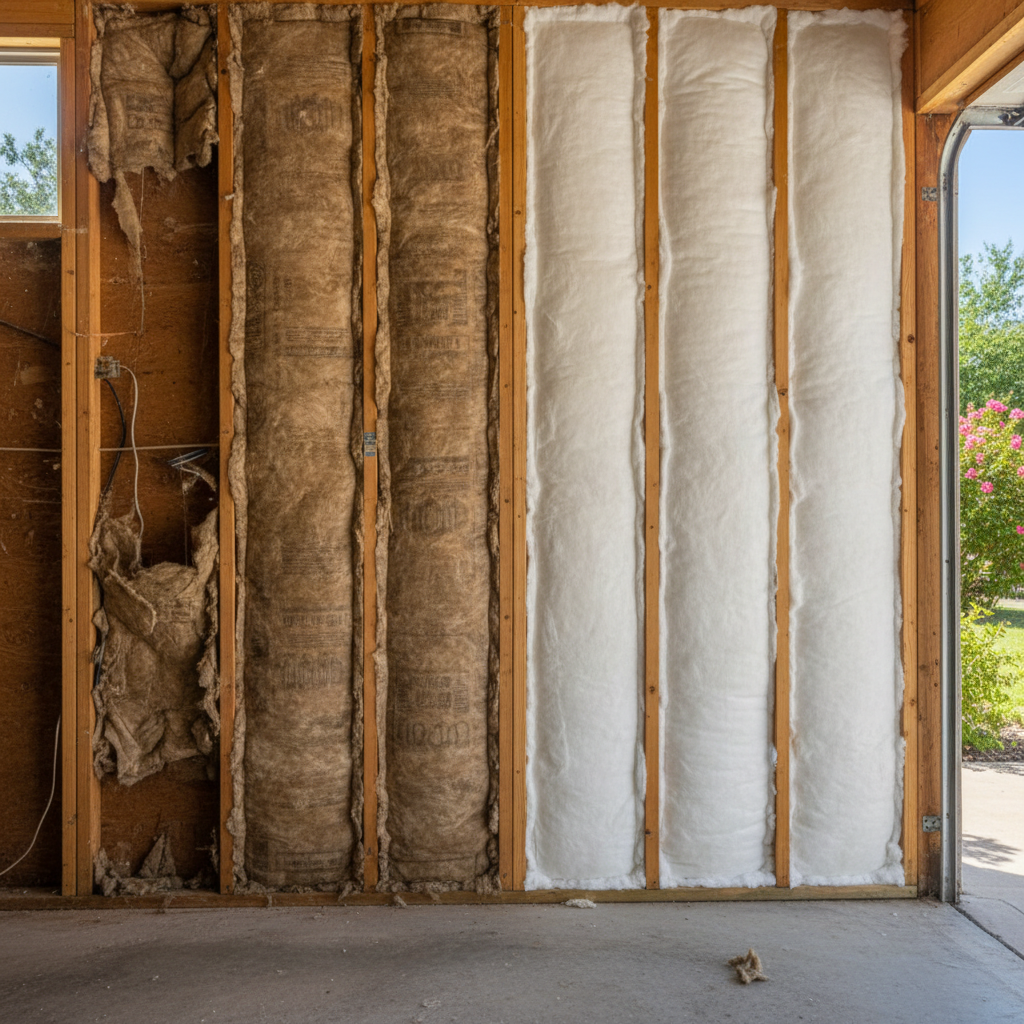
You want a cooler garage, right? Especially with those brutal Forney summers. It's not just about comfort; a well-insulated garage can protect your tools, keep your car from feeling like an oven, and even help keep the rest of your house cooler if it shares a wall. When folks around here ask me about insulating their garage, two options usually come up: radiant barriers and traditional fiberglass batts. Let's talk about what each one does, what they cost, and which one usually wins out for us in East Texas.
Understanding Radiant Barriers
A radiant barrier is pretty straightforward. It's a reflective material, usually a thin sheet of aluminum foil, that's designed to block radiant heat transfer. Think of it like a space blanket for your garage. Heat from the sun beats down on your roof, and that heat radiates into your attic and then into your garage. A radiant barrier reflects a huge percentage of that heat right back out.
I've seen these things work wonders in attics, and they're just as effective in garages, especially if your garage ceiling is directly under the roof. They don't stop heat that's transferred by conduction or convection as well as traditional insulation, but for radiant heat, they're champions. They're often installed on the underside of the roof deck or directly on the garage ceiling.
Pros of Radiant Barriers:
- Excellent at blocking radiant heat: This is huge in Texas. Most of the heat gain in your garage during summer is radiant heat coming from your roof.
- Relatively inexpensive: Compared to a full blown spray foam job, radiant barriers are a budget-friendly option.
- Doesn't absorb moisture: Unlike some other materials, moisture isn't a problem for radiant barriers, which is good news for our humid climate.
- Lightweight: Easy to install and doesn't add significant load to your structure.
Cons of Radiant Barriers:
- Doesn't stop conductive or convective heat: If you've got walls that get hot from the sun, or air leaks, a radiant barrier won't do much for that.
- Can be tricky to install correctly: You need an air gap on one side to really make it effective. If it's directly touching another surface, its performance drops.
- Appearance: If left exposed, it's just shiny foil. Not exactly decorative.
Traditional Fiberglass Batt Insulation
This is what most people picture when you say